Capoeira as UNESCO Intangible Cultural Heritage
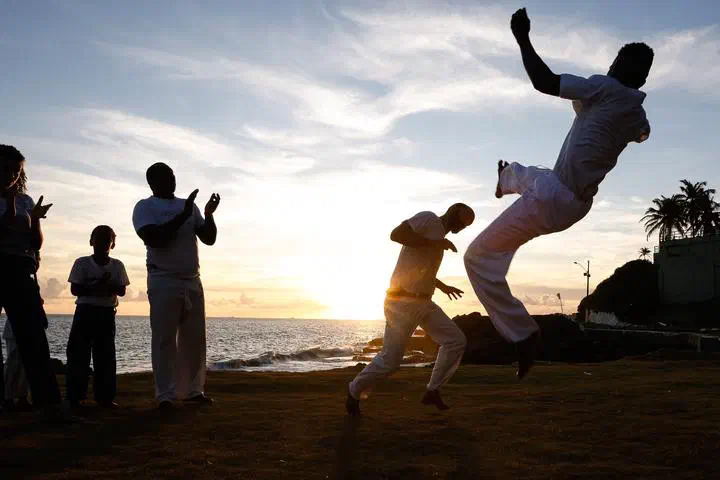 A roda de capoeira at sunset in Salvador da Bahia, 2019. Photo: Clara Angeleas, Secretaria Especial da Cultura, CC BY 2.0
On 26 November 2014, UNESCO added the roda de capoeira to the Representative List of the Intangible Cultural Heritage of Humanity. For an art that had been a crime in Brazil less than a century earlier, it was a historic moment. Here’s what was recognised, how it came about and what it means for capoeiristas everywhere, including here in Berlin.
What is intangible cultural heritage?
Most people know UNESCO’s World Heritage list of places, like old towns, temples and national parks. Since 2003, UNESCO also protects intangible heritage: living traditions such as music, dance, rituals, festivals and crafts, which only exist as long as people keep practising them and passing them on.
From a crime to a heritage
Capoeira’s road to UNESCO was long:
- 1890: Brazil’s new penal code made capoeira a crime. Capoeiristas could be arrested and sent to prison.
- 1930s: Mestre Bimba and Mestre Pastinha opened capoeira schools in Salvador, and capoeira slowly gained respect. Read about them in Who was Mestre Bimba? and Who was Mestre Pastinha?
- 1940: the new penal code no longer listed capoeira as a crime.
- 2008: Brazil’s national heritage institute, IPHAN, registered two things as Brazilian cultural heritage: the roda de capoeira and the ofício dos mestres de capoeira, the knowledge and work of capoeira masters.
- 2014: at its meeting in Paris, UNESCO’s committee inscribed the roda de capoeira on its Representative List.
You can read the full story in The History of Capoeira.
What exactly was recognised?
UNESCO recognised the roda: the circle in which capoeira is played, sung and celebrated. In its description, the roda is a place where:
- people of different ages and backgrounds play together, through movement, music and song;
- knowledge is passed on orally, from mestres to students, in the songs and the rituals;
- the memory of resistance to slavery is kept alive;
- respect, friendship and community are practised.
In other words, it’s not only the kicks and the acrobatics that count, but the whole roda: the berimbau, the songs, the rituals and the relationship between mestres and students.
Why it matters
The UNESCO listing doesn’t make capoeira more “official” or change how anyone plays. But it matters in several ways:
- Recognition: it says to the world that capoeira, born among enslaved Africans and their descendants, is part of the heritage of all humanity.
- Safeguarding: Brazil committed to protect the tradition, for example with support for older mestres, research and documentation.
- Pride: for capoeiristas, especially in Brazil, it was a celebration of the generations of mestres who kept capoeira alive when it was banned.
Capoeira isn’t the only Afro-Brazilian tradition on the list. Samba de roda from the Recôncavo Baiano was recognised years earlier: read What is Samba de Roda?
Watch
- Capoeira circle: UNESCO’s own short film about the roda de capoeira.
- Unesco reconhece as tradicionais rodas de capoeira como patrimônio cultural imaterial da humanidade: a news report by Brazil’s public broadcaster TV Brasil, in Portuguese.
- Roda de Capoeira: Patrimônio Cultural Imaterial da Humanidade: a documentary by IPHAN, in Portuguese.
Join a roda in Berlin
The best way to understand a living heritage is to take part in it. New to capoeira? Start with What is Capoeira?
At Simplesmente Capoeira Berlin you’ll learn to play, sing and make music in the roda. Come and try it in Schöneberg, Kreuzberg or Mitte: no experience needed, and your first month is free.